
Last updated November 24, 2026
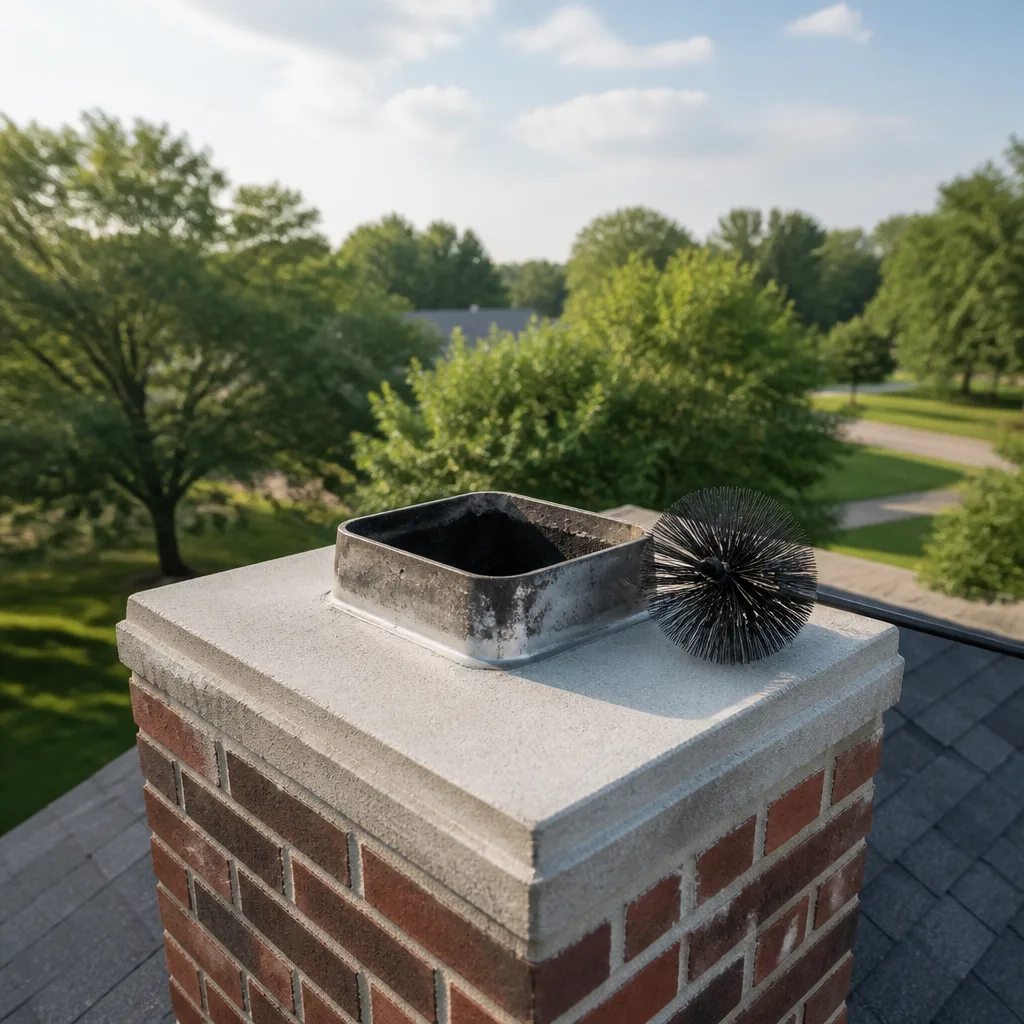 Sweep & inspection
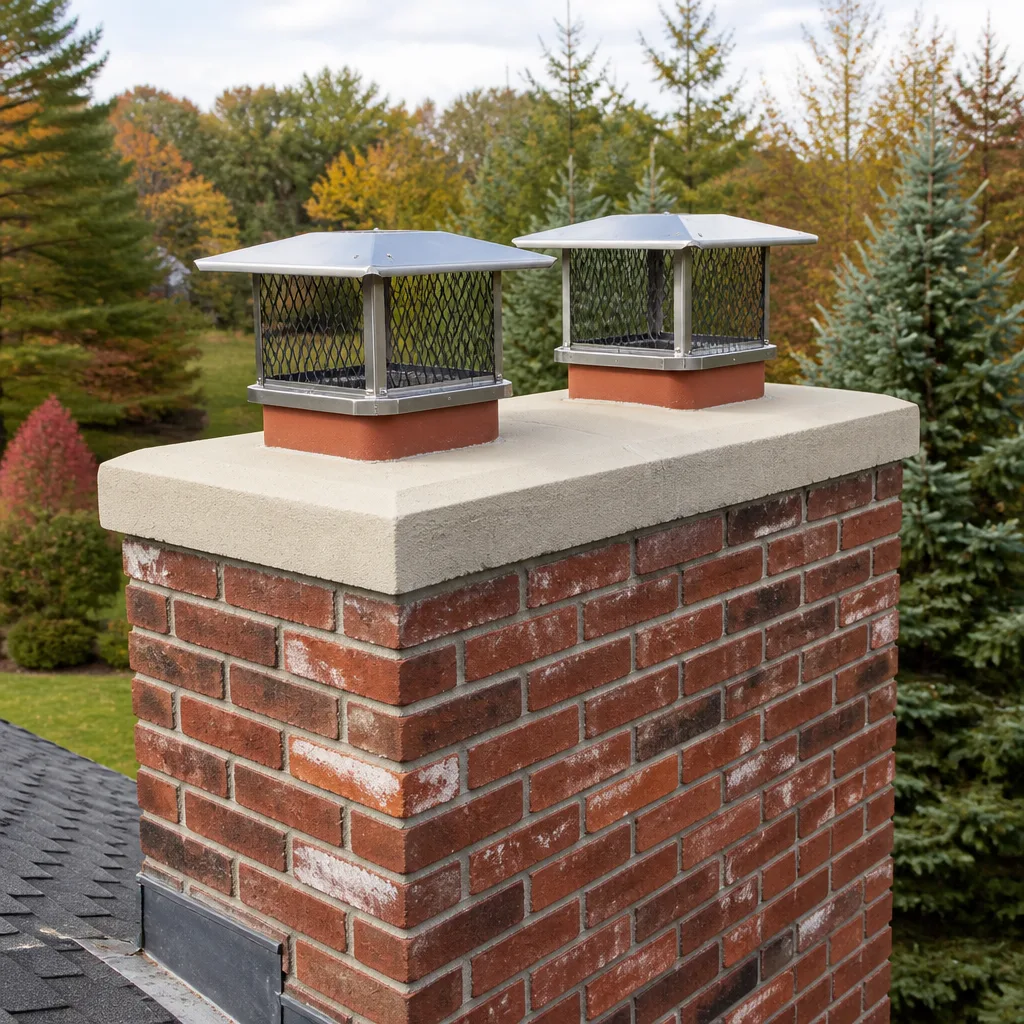 Caps & crowns
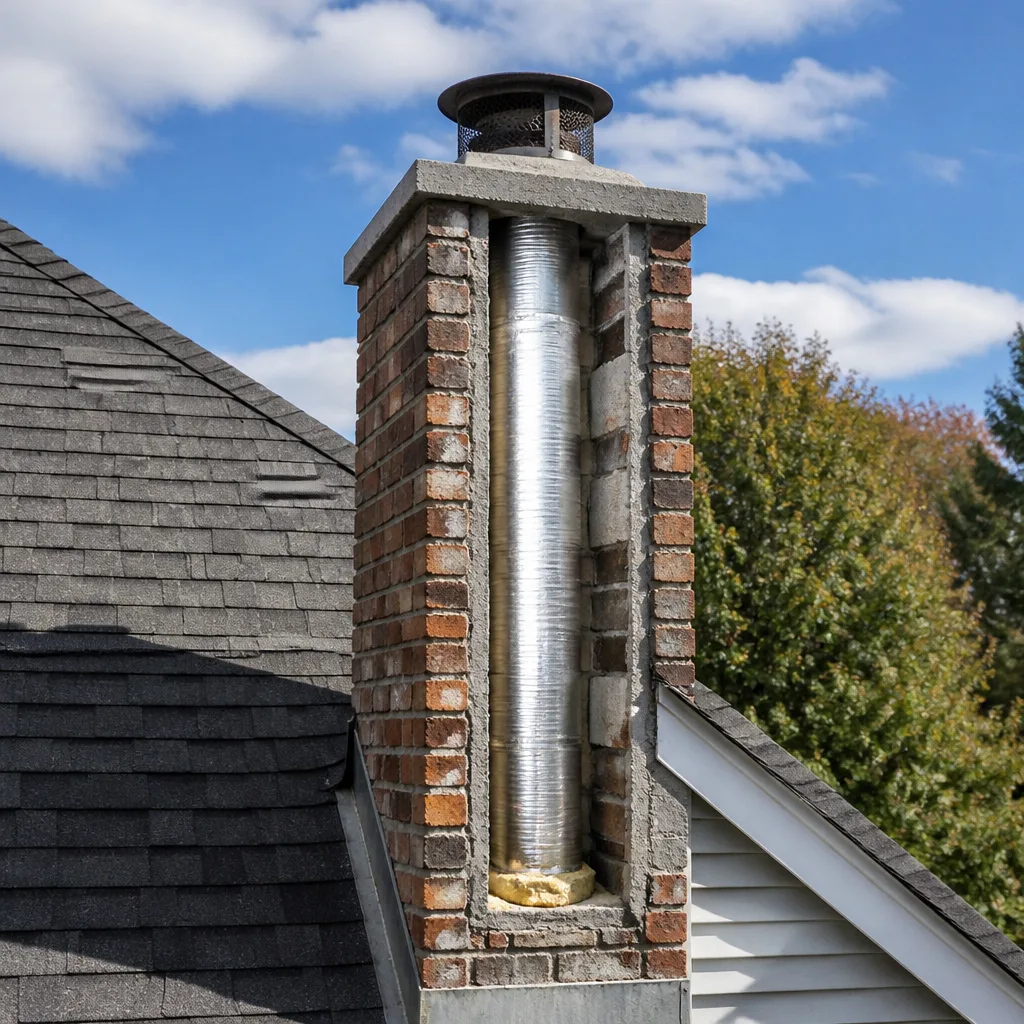 Flue relining
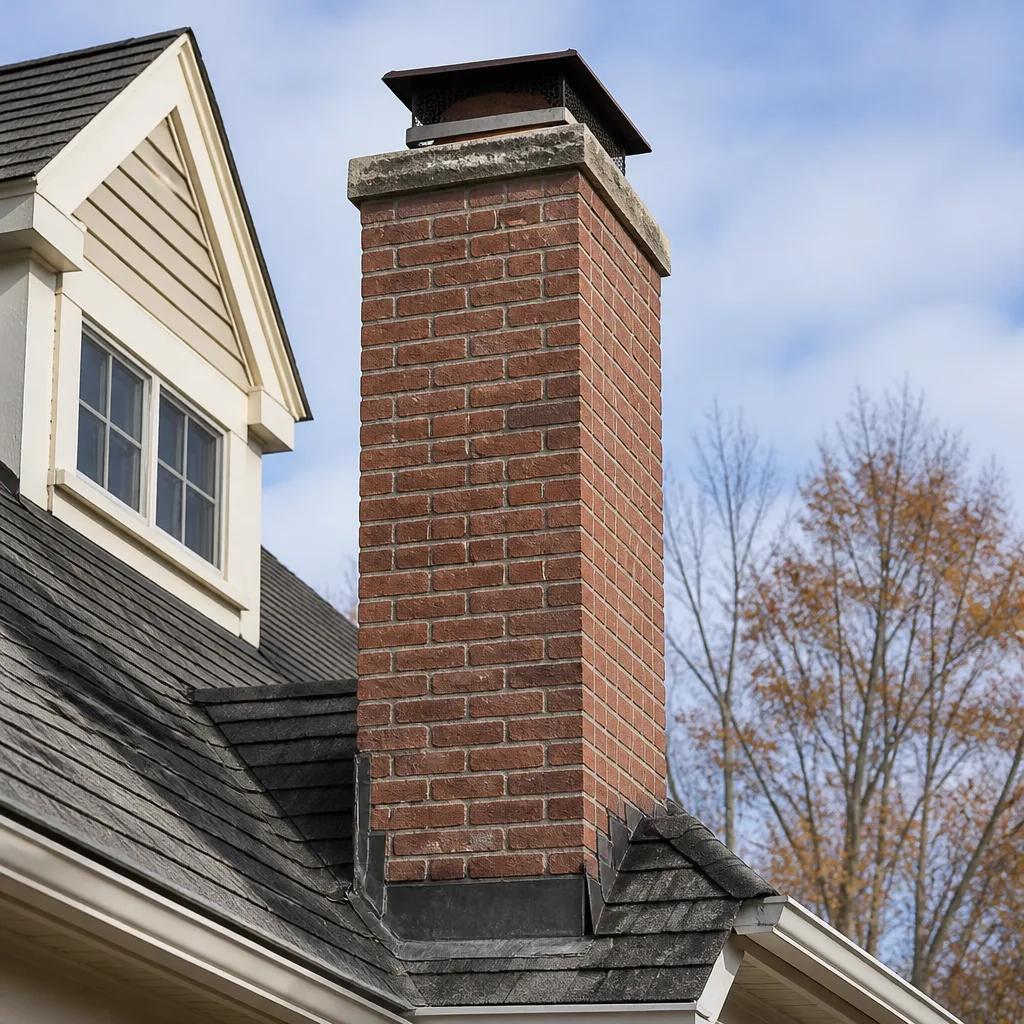 Masonry repair
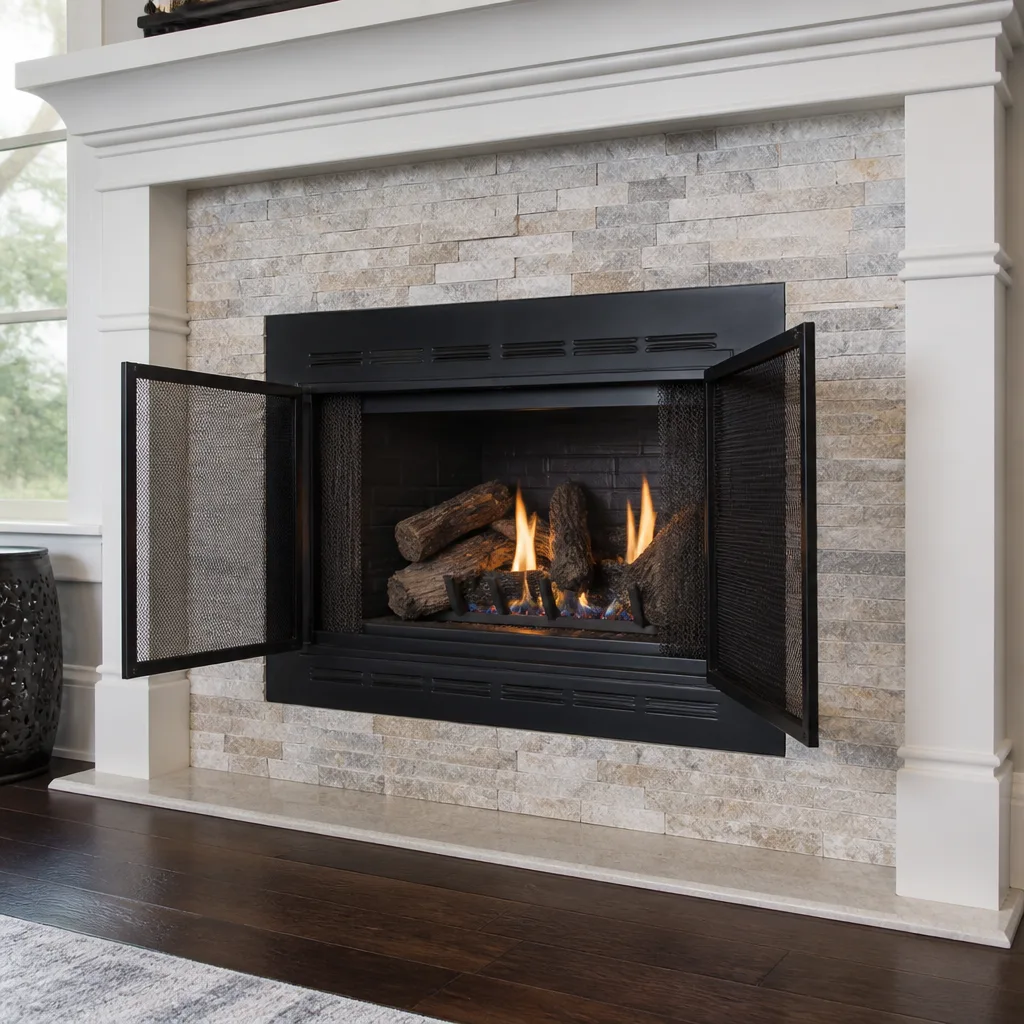 Gas fireplace service
Level 1 sweep and inspection to the NFPA 211 annual standard - flue, crown, cap, and flashing checked and photographed
Chimney sweep logs do not sweep chimneys. They loosen some creosote - which then falls where a brush and vacuum still have to collect it.
Choosing the Right Chimney Cleaning Brand: A Buyer’s Guide for Donelson
Most homeowners in Donelson choose a chimney company by comparing what they can see: a license, a few online reviews, a number at the bottom of a bid. Very few ask a harder question – what materials are you putting on my house? That gap is where a lot of repair work quietly fails. A crown coating that chalks off after two freeze-thaw cycles, a sealant that traps moisture instead of breathing it out, a liner kit that voided the manufacturer’s rating the moment it was installed off-spec: none of it shows up until the next season. This guide walks you through the product categories that actually matter, the brand names tradespeople recognize, and how to ask the question that separates a real material spec from a vague promise.
Quick Answer
The brands that matter in chimney work are the ones professionals specify by name on a written quote – liner systems such as DuraFlex, ceramic resurfacing with HeatShield, and dedicated cap and crown manufacturers such as Gelco, Famco, and Copperfield – because those materials carry manufacturer instructions, temperature ratings, and substrate compatibility that hardware-store products don’t. When a contractor can’t name the brand on the bid, that’s the signal to push back. A chimney cleaning in Donelson is a modest job; a crown or liner repair is where product choice decides how long the fix lasts.
Styles & brands we work with
- Sweep & inspection
- Caps & crowns
- Flue relining
- Masonry repair
- Gas fireplace service
Table of Contents
- The Four Product Categories Where Brand Actually Matters
- Trade-Grade vs. Big-Box: Why the Difference Shows Up Later
- How to Ask a Contractor to Specify Materials on a Quote
- Reading Performance Claims on a Chimney Sealant
- Why Donelson’s Climate Puts Product Choice to the Test
- Warranty and Insurance: What Recognized Materials Buy You
- Repair-First Thinking: Saving a Chimney Without a Full Reline
- Red Flags on a Written Estimate
The Four Product Categories Where Brand Actually Matters
Chimney work uses more materials than most homeowners expect, but four categories account for almost all the long-term performance differences. If you’re going to ask a contractor one question about materials, ask it here. Each of these products is judged by a different set of performance measures, and each fails in a different way.
Crown coatings
The crown is the sloped cap of concrete at the top of the chimney that pushes water away from the flue. A failing crown is the most common entry point for water damage in a masonry stack. Crown repair products range from patching mortar to flexible elastomeric coatings, and the two behave very differently across seasons. A rigid coating that cracks at the first hard freeze isn’t a repair; it’s a postponement. Gelco, Famco, and Copperfield are names you’ll see on crown materials specified by chimney professionals, and each carries a manufacturer’s spec sheet on temperature range and acceptable substrates.
Flue sealants
Sealant is the product category most often fudged. It gets applied around the flue tile joints, at the crown-flue transition, and across hairline cracks in the stack. The critical distinction is between a sealant that is vapor-permeable and one that is only waterproof. A fully sealed, non-breathing coating on aged brick traps moisture inside the masonry, which then spalls the face off when it freezes. We’ll come back to this in the claims section, because it’s the single biggest mistake made with sealants in a climate like ours.
Liner systems
The liner is the flue’s inner pipe, and it carries the combustion gases out of the house. Relining products come in stainless systems (DuraFlex is one we work with), cast-in-place ceramic (HeatShield is the recognized name for ceramic resurfacing), and poured refractory cement. The correct product depends on flue condition, appliance type, and the temperature rating the appliance requires. There is no universal liner, and any contractor who tells you there is hasn’t thought hard about it.
Firebox repair mortars
Firebrick takes direct flame, so the mortar between the bricks is a refractory material rated for high heat, not an ordinary masonry mix. A firebox repointed with standard mortar will break down under thermal cycling. This is one of the clearest places you can tell a specialist from a generalist: ask what mortar they use, and a real chimney company has an answer that includes a product name.
Pulling all of this together under one company matters. When the same business that inspects also does the fireplace repair and the structural chimney repair, the product spec on the bid and the product on the job are the same conversation. We handle the full chimney, from the firebox to the cap, so nothing gets handed off to a second contractor with looser standards.
Trade-Grade vs. Big-Box: Why the Difference Shows Up Later
DIY product lines sold at big-box stores are formulated for the homeowner doing one job on a mild weekend. Trade-only products are formulated for twenty years of weather. The difference isn’t marketing – it’s in the chemistry and the testing behind the spec sheet. Big-box sealants are typically acrylic-based, which means they go on easily, dry fast, and stay flexible for a season or two. Trade-grade elastomeric and polyurethane products cost more per tube, cure slower, and hold their flexibility across a much wider temperature range.
Where the gap actually shows up:
- Elasticity after freeze-thaw. The product has to stretch and recover every time the masonry moves with temperature. Acrylic loses that ability far sooner than elastomeric does.
- Adhesion to aged brick. Old brick face is often friable and dusty. Trade-grade primers and sealants are formulated to bond to that surface; box-store products often bead up or peel.
- UV stability. The crown and cap sit in direct sun. Lower-grade coatings chalk and fade, then crack.
- Temperature ratings. Products applied near a flue have to tolerate elevated heat. DIY lines are usually rated for ambient exterior conditions only.
- Batch consistency. A trade supplier’s formulation stays stable across lots. A bargain line can vary enough that a repair done this year doesn’t behave like one done last year.
None of that shows up on the day of the install. It shows up two or three winters later, when the crown that looked finished starts to craze and the water comes back in. That’s the whole case for trade-grade materials in a hundred words: you’re buying the second and third season, not the first.
How to Ask a Contractor to Specify Materials on a Quote
This is the practical part. You don’t need to become a materials expert to hold a contractor to a real spec – you need to know what to ask for and how to read the answer. A written quote should name the product. Not the category, not the brand “family,” the product and the manufacturer. Here’s how to get there.
- Ask for materials in writing before the estimate is final. “Can you list the brand and product name for the sealant, crown coat, and any liner materials on the quote?” A professional will either know or will get back to you. Neither answer is a problem. A shrug is.
- Ask why that product, not another. The follow-up question is where expertise shows. A good technician can tell you the temperature rating, the substrate compatibility, and the curing conditions. A vague answer is a signal about sourcing.
- Ask for the manufacturer’s spec sheet if it’s a major repair. On a liner system or a crown replacement, the manufacturer publishes installation instructions. A contractor who installs to spec will follow them; the sheet tells you what “to spec” means.
- Watch for the word “standard.” If the quote says “standard sealant” or “premium crown coat” without a name, it isn’t a spec. It’s a category label with no accountability behind it.
- Confirm the products are new, not leftover. Old sealant that’s been in a truck bed through winter behaves differently. It’s a fair question to ask about anything being applied to your chimney.
We’ve seen bids from other contractors come through Donelson with nothing but a lump-sum number and a line that reads “seal crown.” That tells you nothing about what’s being installed or how long it should last. A real written estimate names the product, the quantity, and the reason it was chosen for your chimney. Our estimates are free, and the written estimate sets the final price – nothing gets added after the fact on the basis of a material decision you didn’t authorize.
Reading Performance Claims on a Chimney Sealant
Chimney sealant packaging is full of claims that sound precise but don’t mean much. The ones worth checking are specific and testable. Three of them decide whether a sealant is right for your chimney: vapor permeability, temperature rating, and substrate compatibility with aged brick. Here’s what each one actually means for a Donelson house.
Vapor-permeable vs. waterproof
These are not synonyms, and the difference is the whole game on masonry. Brick and mortar absorb moisture from the air, from rain, and from inside the house. That moisture has to get back out. A sealant that is vapor-permeable lets it escape while blocking liquid water from coming in. A sealant that is waterproof but not vapor-permeable traps moisture in the masonry, and in a freeze-thaw climate that moisture expands and pushes the brick face off. The result is spalling, which is a much more expensive problem than the water you were trying to stop. Check that a product is labeled vapor-permeable, not just “waterproof” or “weather-resistant.”
Temperature rating
Two temperature numbers matter. The first is the application temperature range – the sealant has to cure correctly at the temperature it’s applied in, which is why a repair in a cold snap needs a product rated for low-temperature cure. The second is the service temperature on the flue side, which has to tolerate the heat coming off the chimney. A product rated only for exterior ambient conditions shouldn’t be used near an active flue.
Substrate compatibility
Not every sealant bonds to every substrate. Aged brick, lime mortar, concrete crown, and metal flashing all tolerate different products. The manufacturer’s data sheet lists acceptable substrates, and any product being applied outside that list is being used off-label. On a repair where you’re paying for a result, off-label is the wrong bet.
The chimney cap & crown work we do depends on getting all three of these right, because the crown and cap are the parts of the chimney getting the most weather. Cap and crown materials from dedicated manufacturers (Gelco, Famco, and Copperfield among them) are designed for exactly that exposure, and they’re a different product class from a generic hardware-store cap that’s been stamped out of thin gauge sheet metal.
Why Donelson’s Climate Puts Product Choice to the Test
Donelson sits in a climate that is genuinely hard on masonry: hot, humid summers and winters that swing hard across the freeze line, often more than once in the same week. A chimney doesn’t get to sit quietly through either season. It takes on moisture all summer, then expands and contracts through winter, and any weakness in the exterior envelope gets worked on repeatedly for years. That pattern is what makes the vapor-permeability question so important here – not because the product is exotic, but because the climate is unforgiving of the wrong one.
The consequences are specific:
- Humidity load. Long, humid summers let masonry absorb a lot of moisture. Vapor-permeable coatings let it escape; non-permeable ones trap it for winter.
- Freeze-thaw cycling. Every cycle where moisture freezes inside the brick pushes the face out a little. A stack with a hairline crack in the crown gets that cycling at the most exposed point.
- Summer storms and wind-driven rain. The crown and cap are the weather side of the stack. A cap that doesn’t mount properly is worse than none, because it channels water into the flue instead of off it.
- Heating season transitions. The first cold snaps come fast here. A chimney that takes on water through fall gets that water into the flue gas path at the worst moment of the season.
All of this is why HVAC-style “seal it and forget it” products fail on masonry in Donelson. The right product family is the one built for masonry movement, and the trades use it for exactly that reason. If a contractor recommends a product engineered for a mild climate and applies it to a Donelson stack, you’ve bought a problem you’ll be fixing again in a couple of years. The materials have to be matched to the climate, not just to the category.
Warranty and Insurance: What Recognized Materials Buy You
There’s a reason product names show up on insurance claims and rarely on the homeowner’s radar. When a chimney fire or water damage claim comes through, the insurer or adjuster may ask what was installed and when. A repair installed with a recognized trade product and documented on the invoice is far easier to substantiate than one described as “sealed crown, standard materials.” Warranty works the same way – a manufacturer’s warranty is only good if the product is installed per the manufacturer’s instructions and the record exists. A generic product has no warranty to call on.
Recognition is where the professional standards come in. Manufacturers who work with CSIA-certified chimney professionals and whose products appear in NFPA 211-aligned guidance carry a paper trail behind their product. That paper trail does two things for you: it means the manufacturer has skin in the game, and it means there’s a written, testable standard for how the product is applied. If your contractor’s product choice doesn’t connect to any of that, it’s worth asking why.
None of this is abstract in Donelson. The Chimney Sweep Donelson work we do rests on the fact that the same company that specified the product is the one accountable for it. One inspection, one company, one point of accountability. When something goes wrong two seasons later, you’re not on a call between the cleaner and the repair crew trying to work out who owns the material decision. The local pro we connect you with is licensed and insured as their state requires, and the written estimate names the materials so you have a record from the start.
Repair-First Thinking: Saving a Chimney Without a Full Reline
The most expensive mistake in chimney repair isn’t the wrong product – it’s jumping to the biggest job. A cracked flue doesn’t automatically mean a full reline, and a chimney that could be resurfaced shouldn’t be torn out because the first crew only had one tool in the truck. This is where HeatShield, a ceramic resurfacing method, changes the conversation. It’s an advanced liner restoration technique for flues with certain kinds of deterioration, and not every chimney company offers it. When a chimney’s condition is right for it, it can extend the life of the existing flue without the cost and disruption of a full reline.
The key qualifier: it has to be the right product for the right condition. That judgment comes from a real inspection – camera work, photo documentation, and an honest assessment of the flue’s structure. The order should always be:
- Inspect. Camera inspection with photos of the actual flue condition. Nothing gets recommended without it.
- Diagnose. Is the issue a localized crack, widespread spalling, or a structural failure? The answer points to different products.
- Choose the least invasive repair that actually works. Resurfacing may handle it; a localized repair may handle it; a reline may be the only honest answer. It depends on the flue, not the sales pressure.
- Explain what was found and why the recommendation makes sense. You should see the evidence before you authorize the work.
When the flue needs a full reline, the liner product matters just as much – DuraFlex is one of the stainless liner systems we work with. The point isn’t the brand name; it’s that the name on the box comes with a spec sheet, a rating, and a manufacturer’s instructions that a professional can install to. That’s the difference between a repair and a guess. And on any major repair, the chimney sweep is usually part of the same visit, because you can’t fully assess a flue without cleaning it first. One trip, full picture.
Red Flags on a Written Estimate
A written estimate is the most useful document in the whole process, and the red flags are usually visible before any work begins. What you’re reading for is whether the company can tell you, in specific language, what they intend to do and with what. General language on a major repair is a risk signal, not a stylistic choice.
- No product name anywhere. “Seal crown, repair flashing, spot-point masonry” with no brand or product type means you have no way to know what’s being installed.
- No quantities or measurements. A real quote specifies how much area is being treated or how many feet of liner is being installed. It tells you what’s actually happening for the money.
- “We’ll see once we’re up there.” Some things genuinely can’t be known until the sweep and inspection, and a good estimate accounts for that with a numbered scope and a pricing schedule. A completely open-ended quote is different.
- A recommendation with no evidence. If a company tells you the liner is cracked without showing you photos or camera footage, push back. Nothing should be recommended on trust alone when the technology to demonstrate it exists.
- Only one product offered with no explanation. A specialist can tell you why one product fits and another doesn’t. A single option with no reasoning usually means a single source, not a considered recommendation.
- Pressure to decide on the spot. Chimney repair is rarely an emergency. There’s almost always time to think about a major scope on a Donelson house, and any urgency should be weighed against the ability to review the evidence.
Common Mistakes to Avoid
- Choosing the cheapest bid without reading the materials list. A bid lower than every other by a wide margin usually means a product downgrade, not a better deal. Ask what’s being installed and why before you compare numbers.
- Accepting “waterproof” as the goal for masonry. In Donelson’s freeze-thaw climate, a waterproof but non-breathing sealant traps moisture in the brick and causes spalling. Vapor-permeable is the requirement.
- Skipping the camera inspection. Photos of the actual flue condition are the only way to know what repair is appropriate. If the company won’t show you, that’s the red flag, not the price.
- Letting a generalist subcontract the repair to a separate crew. The finger-pointing when something fails is real. A chimney specialist that does the full scope has one accountability chain.
- Using a hardware-store cap on a custom flue. Off-the-shelf caps are made for a standard flue size. A proper cap from a dedicated manufacturer mounts to the actual flue, not near it.
- Assuming a crown is fine because it “looks solid.” Hairline crazing looks like almost nothing and channels water into the masonry through the freeze-thaw cycle. Have it inspected before you assume.
- Replacing a chimney system when resurfacing could have done the job. HeatShield and other restoration methods can extend chimney life significantly when the condition is right. A company without the capability will default to the full replacement.
See the difference
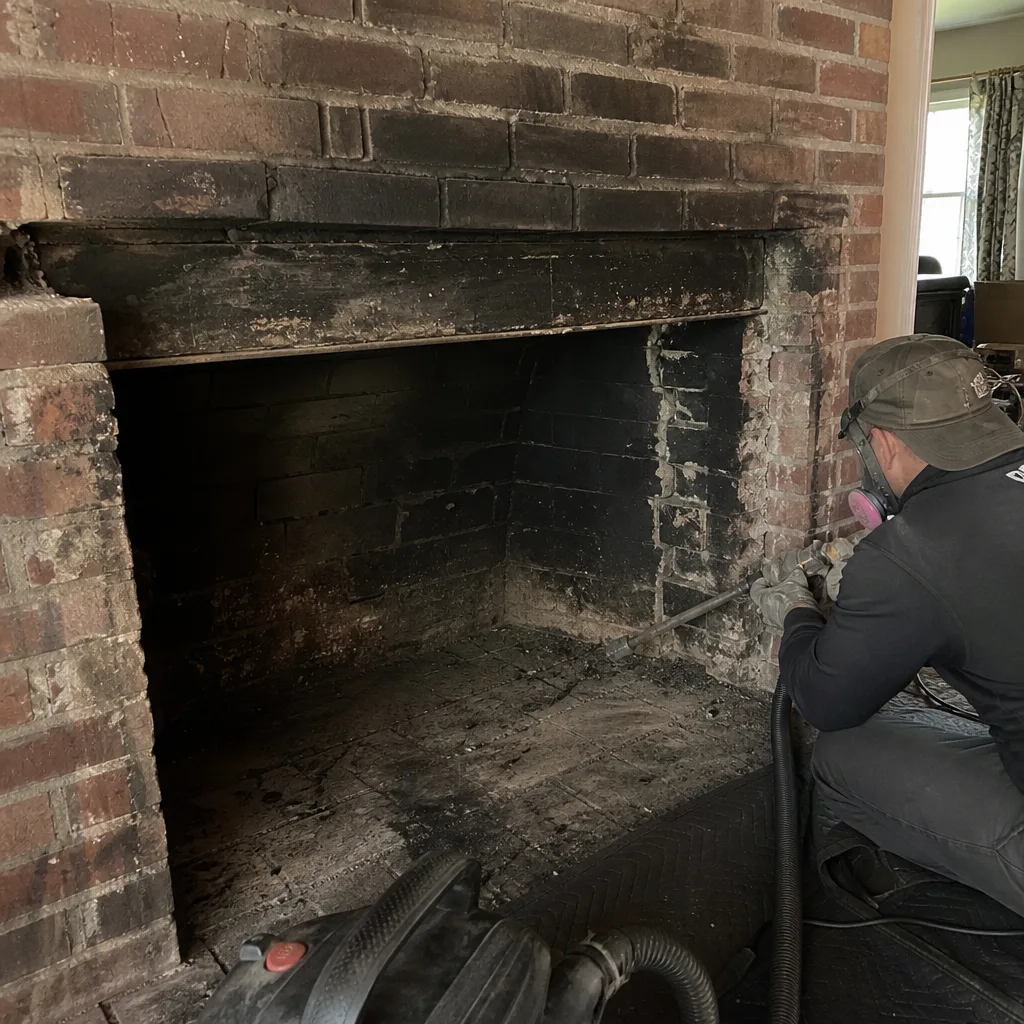 Before
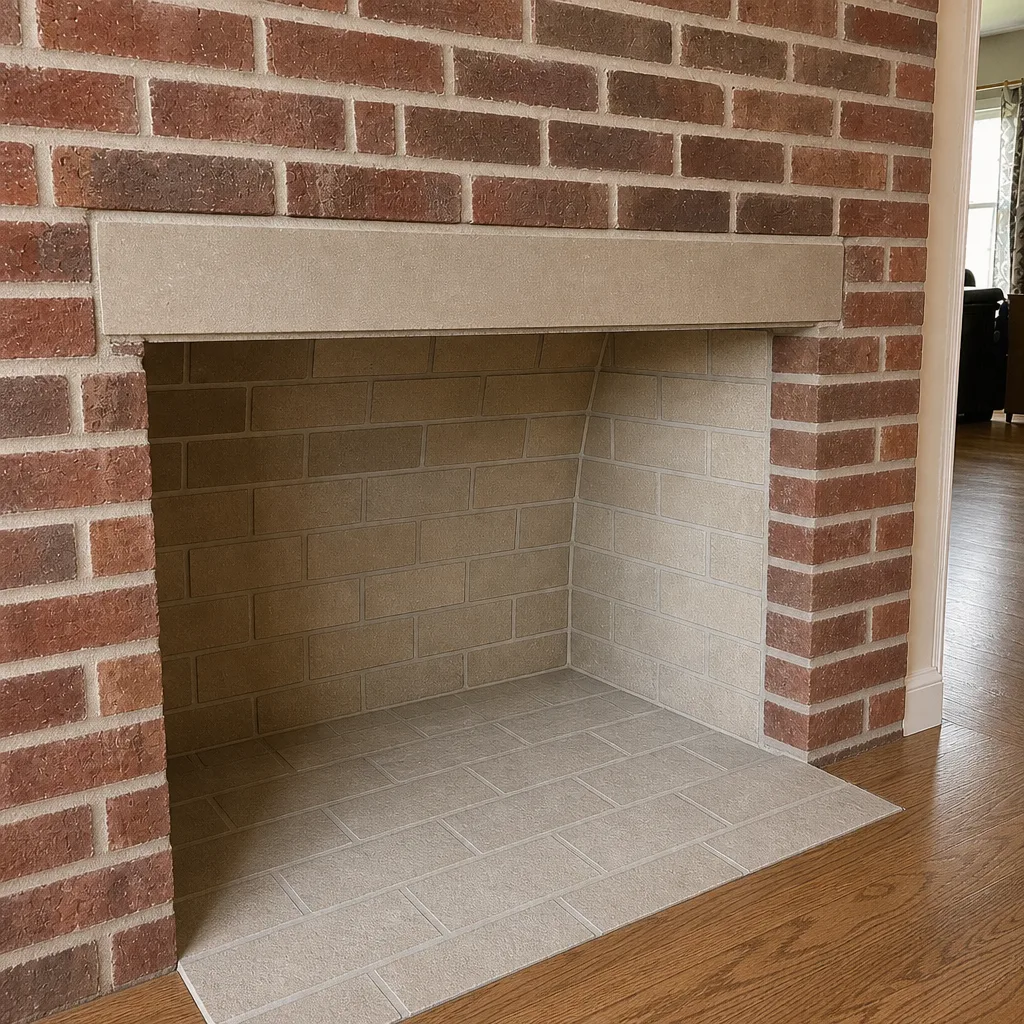 After
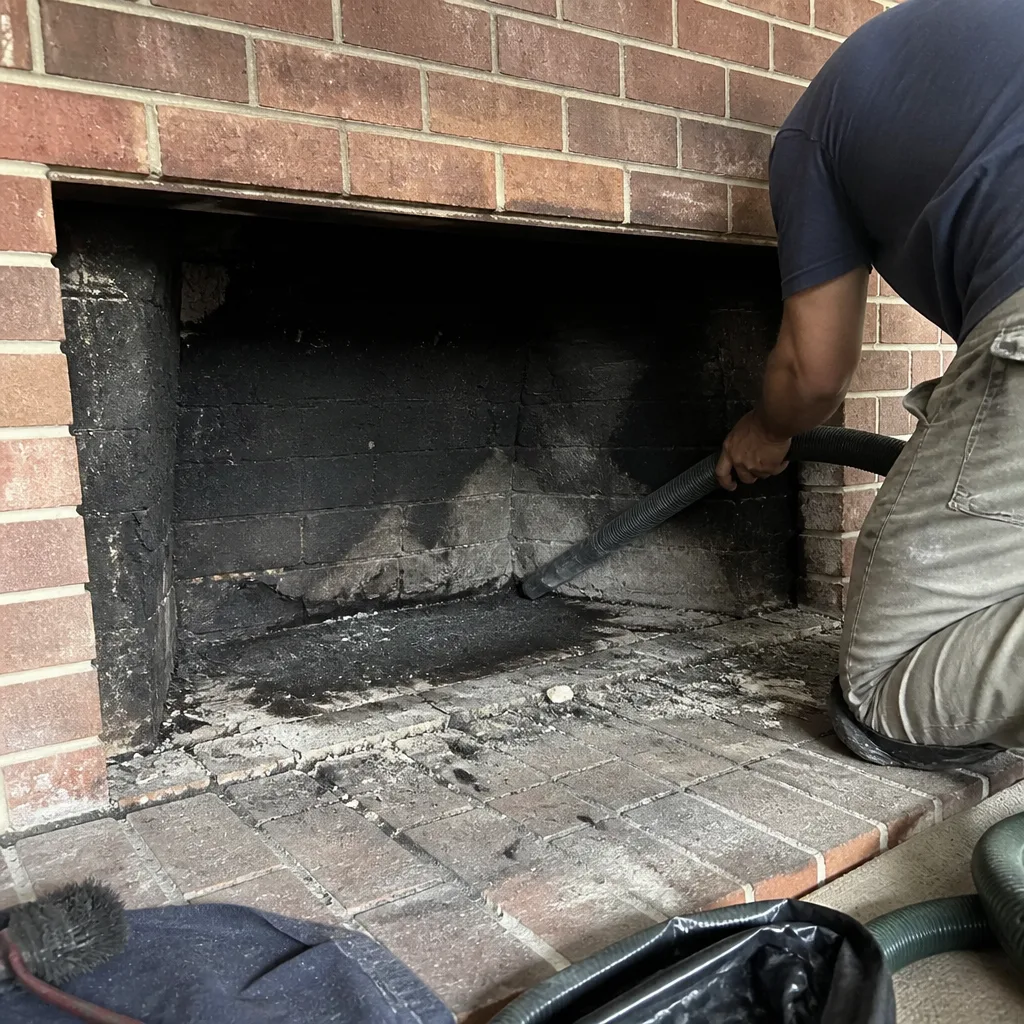 Before
 After
 Before
 After
When to Call a Professional
Some chimney work is genuinely worth a call even if nothing looks obviously wrong. If your chimney hasn’t been inspected in a while, if you’ve just bought the house and don’t have documentation, if you’re seeing water stains or white chalky efflorescence on the exterior masonry, if the crown is cracked or the mortar joints are crumbling, or if your firebox has any visible deterioration, those are all reasons to get a real assessment before the next heating season. If you’ve had a chimney fire (even a small one), get it inspected – chimney fires can damage the flue liner in ways that aren’t visible from the room. For any of these, call Chimney Sweep Donelson at (855) 337-0795 for a free estimate. Fast dispatch from 7am to 7pm, Sunday through Friday. We answer 24/7.
Frequently Asked Questions
Yes, because the brand is the closest thing you have to a spec. Recognizing the brand means you can check the temperature rating, vapor permeability, and substrate compatibility against your chimney’s condition. A named product with a manufacturer’s spec sheet is verifiable; “standard sealant” is not. Ask for the name on the quote before you authorize anything. Call (855) 337-0795 for an exact quote – estimates are free.
HeatShield is a ceramic resurfacing method for restoring a flue that’s deteriorated but structurally sound enough for the treatment; a full reline replaces the flue path with a new liner system. Which one fits depends entirely on the flue’s actual condition, which is why a camera inspection comes first. If a company recommends a full reline without showing you photos of the problem, get a second assessment. Call (855) 337-0795 to schedule an inspection.
For most wood-burning fireplaces, once a year ahead of the heating season is the standard recommendation, with more frequent sweeping if you burn often. A gas insert generally needs less frequent sweeping but still benefits from an annual inspection. If a sweep is done, have the inspection documented so you have a record. Call (855) 337-0795 for an exact quote – estimates are free.
Yes, for masonry in a freeze-thaw climate like Donelson’s. A vapor-permeable sealant blocks liquid water from coming in while letting moisture vapor escape, so the brick doesn’t hold water through winter. A waterproof but non-breathing product traps moisture in the masonry and causes spalling. Check the label for “vapor-permeable,” not just “waterproof.” Call (855) 337-0795 if you want an honest read on your chimney’s current condition.
It may look fine for a season or two, then start to chalk, craze, and crack as the masonry moves through freeze-thaw cycles. The failure is rarely immediate – it shows up as water back in the flue and erosion at the crown edge. Trade-grade products cost more per unit because they’re formulated for that movement and cycling. Call (855) 337-0795 for an exact quote on a proper repair – estimates are free.
Yes, and it’s the right structure when a chimney needs more than a sweep. Chimney Sweep Donelson handles sweeping, inspection, fireplace repair, cap and crown installation, and chimney repair, using materials from DuraFlex, HeatShield, Gelco, Olympia Chimney, Famco, and Copperfield. One inspection, one company, one point of accountability means the product specified on the bid is the product installed. Our technicians have up to 8 years of experience. Call (855) 337-0795 – we answer 24/7, fast dispatch from 7am to 7pm, Sunday through Friday.
The Bottom Line
The materials question is the one most homeowners never ask, and it’s the one that determines whether a repair lasts two seasons or fifteen. Trade-grade brands like DuraFlex, HeatShield, Gelco, Famco, Olympia Chimney, and Copperfield exist because chimney professionals need products built for the conditions on a real chimney – not a mild late-summer job. The skill on your side of the transaction is simple: ask for the product name on the written quote, ask why that product, and watch for vague language. A specialist who can answer those three things is a specialist worth calling. We handle the full chimney, from the firebox to the cap, and we explain what we find and why it matters before we do anything. If your chimney is due for inspection or repair, call Chimney Sweep Donelson at (855) 337-0795 for a free estimate. A written estimate sets the final price, and it names the materials so you know what’s actually being installed on your Donelson home.
Written by the team at Chimney Sweep Donelson.